


Cybersecurity Revamp Begins – All Credit To the Zero Trust Security As We Enter Into the New Normal
Across the globe, organizations are preparing for the new age of digital defense. Way back in 2020, COVID-19 paralyzed the organizational norms worldwide. From an IT viewpoint, we were forced to work differently. The choices lingered between “doing things right” versus “keep the business afloat”. With COVID, there was no choice but to keep it afloat. And that pushed the businesses to take up unprecedented and risky changes in no time.
The major shock of COVID-19 into the traditional enterprises was also noticeable. VPNs got surprisingly overwhelmed and became unusable significantly. Today, the traditional enterprises are quite better, although they confronted drastic and high potential risks to their security stance.
The Word From The Authority
“(Because of COVID-19), we saw two years of digital transformation in two months.” – Satya Nadella, Microsoft CEO
The businesses that did quite well in performing their own cloud strategy pre COVID now are much better than those that weren’t. The reason is these businesses got the opportunity to strategize and make preparations for the “new normal” before it arrived. The need of the hour was to introduce a new security model as the IT teams across the world pivoted towards the path of working remotely and distributing services.
Hence, the Zero Trust Security strategy was the best aligned to provide security across the environments.
Revamping Cybersecurity Architecture
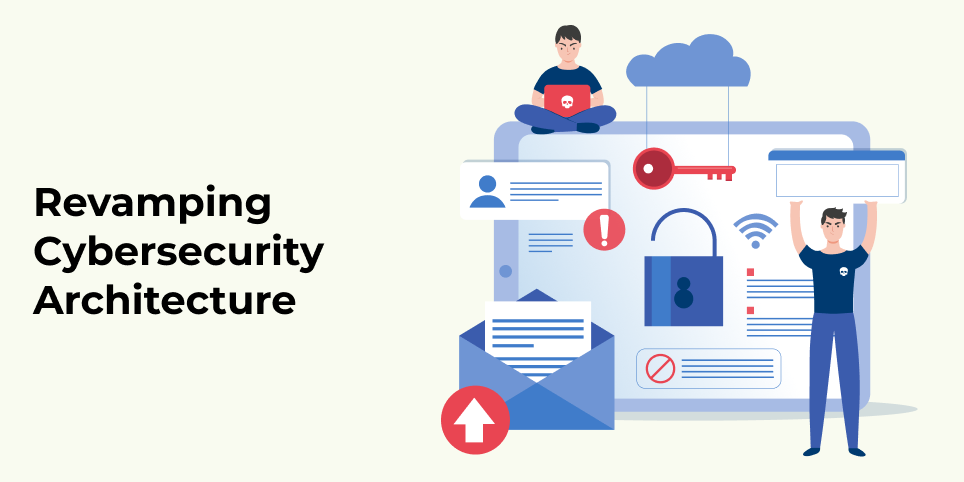
Cybersecurity has transformed to a phenomenal level. It has changed beyond recognition evolving and matching shifts in technologies like AI, Cloud, ML, IoT, edge computing, and mobile. All this is made possible while amplifying the digital transformation efforts. Furthermore, there are systemic cybersecurity challenges that are doing rounds in great frequency on the domestic and international political agendas. This has made the organizations realize the need for cyber resilience publicly. And there comes the urge to adopt a zero-trust security architecture as a priority for so many organizations.
Additionally, SMEs are highly concerned about the rising cyber defense budget as it drives the cost of running the business and erodes the profit margins. With the increasing frequency of ransomware attacks, every organization is looking forward to strengthening the cybersecurity ecosystem. Most companies have already invested in cybersecurity tools from identity and access management, anti-virus, virtual private networks, endpoint detection, data encryption, network segmentation, and two-factor authentication.
At present, the cybersecurity architecture is set to perform the below actions:
-
Adapt to the changes by providing greater ROI with a longer shelf life
-
Leverage prior investments that sounded difficult to collate with the company
-
Deliver cost-effective strategy with business flexibility
-
Integrate options, partners, and technologies across the ecosystem.
Cybersecurity revamping is happening across the globe. And companies have now acquired the answer to how can their business get a futureproof and innovative security system.
Zero Trust Security – The Dominant Architecture Supporting Cybersecurity Ecosystem
As the momentum is shifting to a cloud-powered zero trust architecture, every user is resting assured of the future benefits that are set to come. The impact of zero trust lies in giving the least access and following the principle of not trusting any user or application inherently. It starts with the assumption that everything is hostile and that trust can only be developed by way of authentication.
The zero-trust security model begins with validating the user identity clubbed with business-policy enforcement created in context with the user data, and authorized app to deliver authenticated content and resources. The entire process is led by three key principles: connect users and applications to resources avoid threats, create applications that are invisible leading to reduced attacks, and use proxy-based architecture for content inspection and security.
Ingenious Collaboration & Cooperation
With the revamp of cybersecurity systems, business leaders are forced to collaborate with technologists and the cyber team. Furthermore, this cyber team requires coordination with telco engineers, network engineers, infrastructure teams, IT risk management professionals, application development teams, and operations team in several unseen ways that has never occurred in the past.
The vendors, solution partners, and suppliers are here to sense the tremendous opportunity that is rising due to this drastic change occurring within the industry. There are a plethora of options and choices in the cybersecurity market and technology leaders must plan and choose the key partners with great care and wisdom.
Those who will ignore the change are sure to peril in the future. With the emergence of the great revamp in cybersecurity, comes the most exciting challenges that the industry must prepare for while accommodating the new normal. Because anything new always starts with zero. So let us get ready for the big good change.